FDIC-Insured – Backed by the full faith and credit of the U.S. Government

FDIC-Insured – Backed by the full faith and credit of the U.S. Government
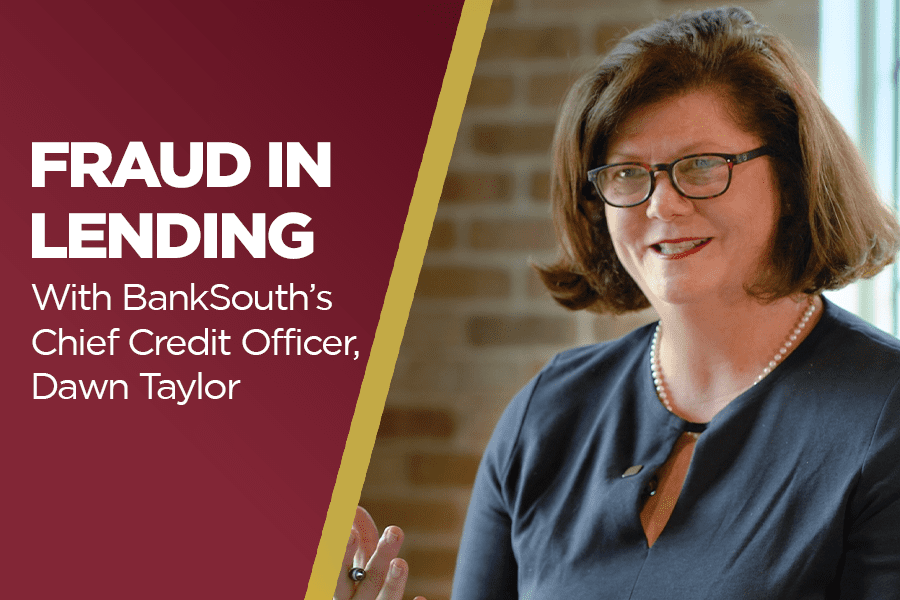
The BankSouth Fraudcast returns with another conversation focused on protecting our customers, communities, and employees from evolving financial threats. In this episode, Bryce McCuin, Director of Marketing at BankSouth, is joined by Dawn Taylor, Chief Credit Officer, who offers her insight on one of the most complex areas of financial crime — lending fraud. Together, they explore how this type of fraud occurs, its impact on borrowers and banks alike, and the steps BankSouth takes to detect and prevent it.
As Chief Credit Officer, Dawn Taylor oversees the health and integrity of BankSouth’s loan portfolio — which makes up roughly 90–93% of the bank’s assets. Her role ensures that loans are well-graded, properly monitored, and compliant with regulatory and risk standards. Working closely with a team of experienced professionals, she helps guide responsible, sustainable lending decisions that balance opportunity with security.
Lending fraud occurs when someone intentionally provides false or misleading information to a bank in order to obtain a loan. This can involve falsified income, fabricated employment details, or misrepresented loan purposes — such as claiming personal occupancy on a property intended for rental or resale. These are not minor errors; they are deliberate, illegal acts that can lead to serious penalties and prosecution.
Applicants falsify documentation or personal details to qualify for loans they wouldn’t otherwise receive. In one case, a borrower claiming to be a childcare worker reported an annual income of $125,000. After submitting a fake pay stub, their nervous behavior and inconsistent answers raised red flags — ultimately uncovering the fraud.
This occurs when borrowers misstate their intent to live in a property to receive better loan terms. For example, claiming a home will be their primary residence when it’s actually intended for rental or resale.
Fraudsters sometimes target elderly individuals — or pressure them through relatives — to co-sign or guarantee loans. In these cases, the elder may unknowingly risk their savings or certificates of deposit. BankSouth’s employees are trained to protect these customers by:
“If it’s too good to be true, it probably isn’t true.” — Dawn Taylor
Lending fraud doesn’t just harm the bank — it affects everyone involved.
For the Fraudster: It’s a criminal offense with severe legal penalties.
For Victims: It can result in financial loss, damaged credit, or stolen identities.
For Banks: It leads to financial losses that can reach into the millions, as well as reputational harm when cases go public. In one instance, a small community bank faced major fallout after a multimillion-dollar fraudulent loan appeared on the front page of local news — an incident that took years to rebuild trust from.
A borrower applied for a $5 million home loan in Florida with seemingly flawless credentials. However, an underwriter’s background check revealed multiple lawsuits and prior fraud claims against the applicant, including past incidents of collecting earnest money and disappearing. The loan was declined — preventing a multimillion-dollar loss.
A loan officer fluent in another language built a client base within a specific community. Due to language barriers, they operated independently and avoided oversight — creating and cycling fake loans over several years. The scheme ultimately caused millions in losses and lasting reputational damage. The lesson, as Dawn emphasizes: don’t be an island. Collaboration is key to prevention.
Lending fraud affects everyone — from borrowers to communities to banks. Prevention starts with awareness, diligence, and teamwork. As Dawn Taylor reminds us:
“We want loans that can be paid back — not fraudulent loans.”
For more on how to protect yourself and your finances, visit our Fraud Prevention page or explore other episodes of the BankSouth Fraudcast.
Join the BankSouth Fraud Watch monthly newsletter to stay informed about the latest scams, prevention tips, and fraud awareness updates. Fill out the form below to subscribe and help keep yourself and your community protected.
View our latest news and get the latest industry updates on our blog.